HomeAI Build SprintProposition 01AI employeeProposition 02Use casesCasesInsights
About us
Plan an introduction

Document Analysis Intelligence: from many documents to a comparable overview in a table interface

For Bouwend Nederland we built an AI tool that analyses large volumes of documents and turns them into a comparable overview through a matrix interface. With RAG and vector search, dozens of documents can be queried at once on the same questions, including source fragments for transparent decision-making.

Client

Bouwend Nederland

Industry

Brancheorganisatie bouw

Services

RAG & vector searchDocumentanalyseWebapp-ontwikkeling
01

Situation

Bouwend Nederland works with large volumes of documentation: party plans, policy papers, reports and memos. The information you need is almost always in there, but you can't find it quickly enough, especially when you want to compare several documents at once on exactly the same questions.

02

Challenge

Classic search falls short here: you search for words, not meaning. And a standalone chatbot that retrieves fragments is useful, but stays too ad hoc: you get answers per question, not the overview you need to make decisions.

The opportunity lay in turning documents into a comparable dataset, without having to summarise everything by hand first.

03

Solution

We built a tool that indexes large documents in a vector database, so you can query them in natural language and immediately get the relevant fragments back. With every query the system retrieves the most relevant passages, so you get not only a conclusion but also the evidence straight away: literal pieces of text that support the answer. That keeps you close to the source at all times.

The real power lies not in retrieving a single answer, but in the way questions are asked. That is why we introduced a query matrix: a table in which each row is a topic and each column a focus point. In the rows you define themes such as labour market, nitrogen, safety, housing or innovation. In the columns you set out exactly what you want to know, for example the position, a concrete measure, the substantiation, a chosen category or a score against predefined criteria.

This way you can not only ask "what does this document say about this?", but systematically query "what does every document say about every topic, from every focus point?". The result is a flexible framework that lets you assess dozens of documents at once, in a structured, repeatable and transparent way. You design your question set once and get back an overview that is directly comparable.

04

Result

We tested the tool intensively on querying party plans. The goal was not just to summarise, but to assess: do the plans align with a list of predefined positions? Thanks to the matrix approach, you get an immediate overview per party of where it aligns, where it deviates and where it stays vague.

This creates a practical decision layer on top of unstructured documents. At a glance you can see which parties, proposals or plans best match the criteria that matter to the organisation, including source fragments for verification and nuance.

Keep exploring

More of our work.

View all cases
Case · The Hague & Partners

The Hague & Partners

For The Hague & Partners we built an integrated AI platform that automates the entire campaign process within their existing Microsoft environment. From quote to live content: one end-to-end workflow with secure data integration, higher speed and maximum consistency.

Read the case
Case · TNO

TNO

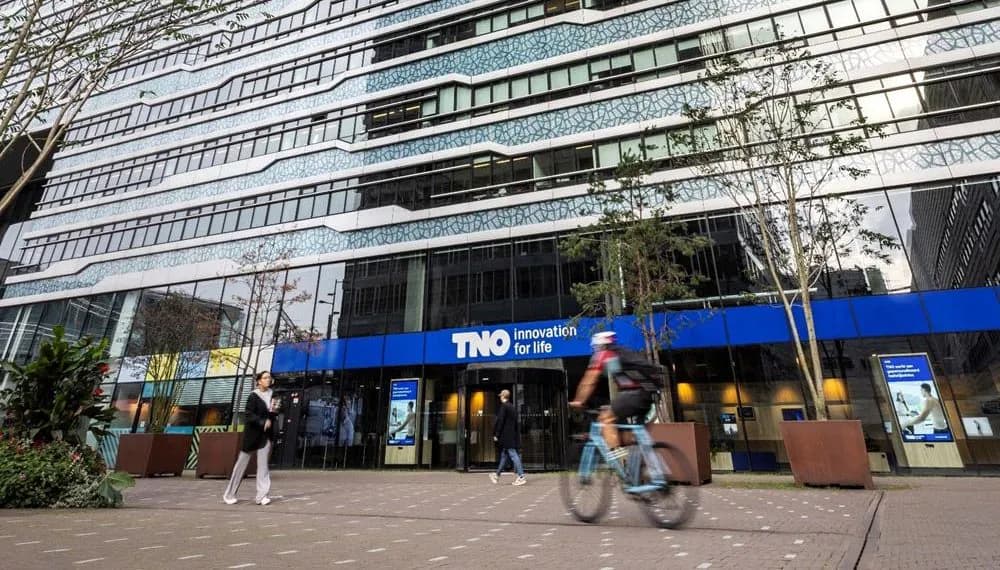
For TNO we set up a GenAI Business Consultant Team that systematically links generative AI to strategic objectives and revenue impact. Through structured use case identification, impact/effort prioritisation and rapid validation, AI shifts from isolated productivity gains to scalable business cases and profit growth.

Read the case
Case · Universiteit Leiden

Universiteit Leiden

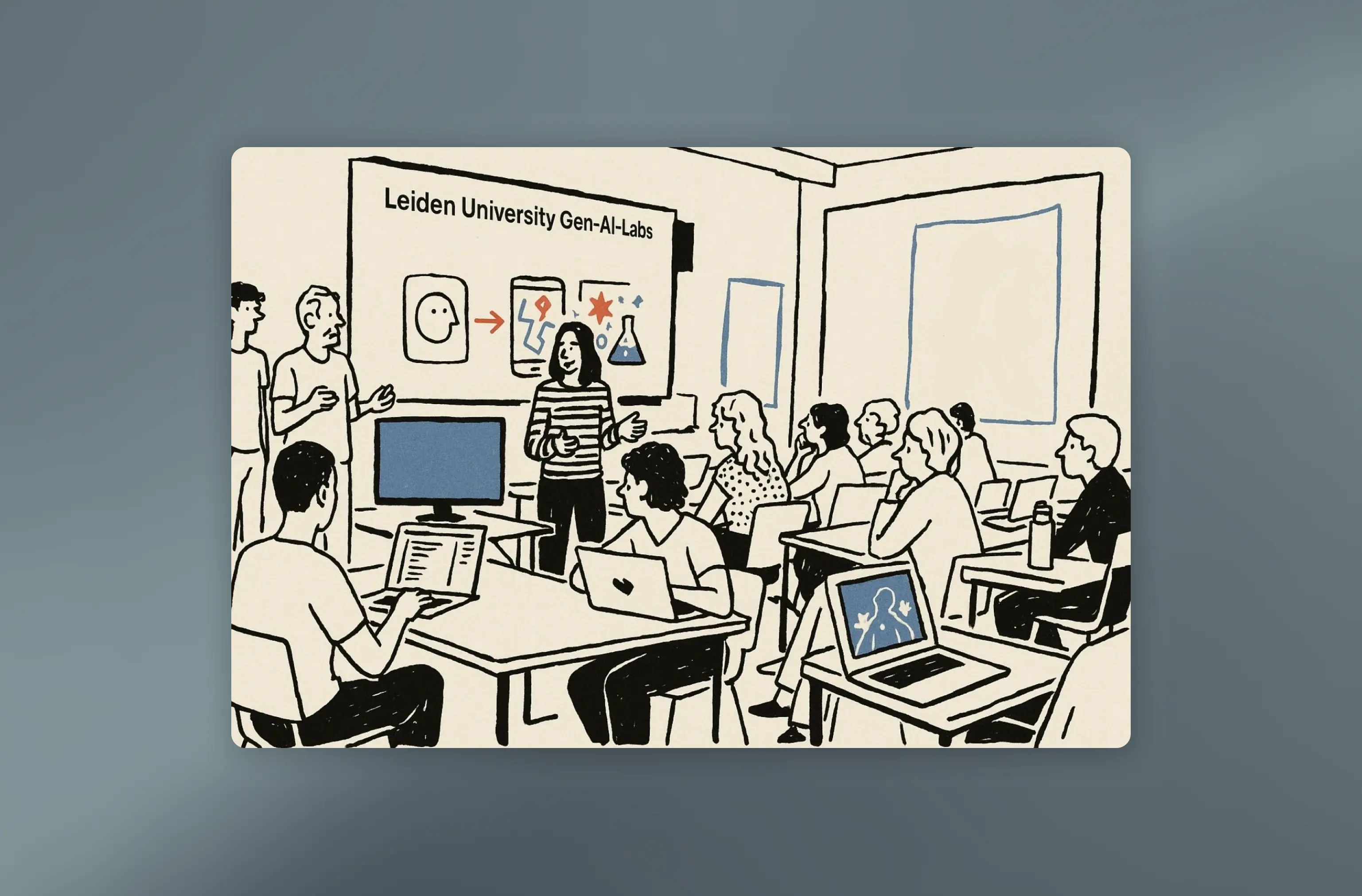
For Leiden University we developed the Gen-AI Labs, in which multidisciplinary teams build their own generative AI prototypes across three sessions. After more than fifty AI trainings, the focus shifts from AI literacy to identifying, testing and further developing concrete use cases within the organisation.

Read the case

Could you be our next case?

In 20 minutes we look together at where your work gets stuck and what the logical first step is.

No sales pitch. 20 minutes about your situation.